Press Release: Disney x OpenAI
The Walt Disney Company and OpenAI reach landmark agreement to bring beloved characters from across Disney’s brands to Sora
Read More
Disney made a $1 billion equity investment in OpenAI, licensing 200+ characters to Sora for fan-generated clips.
Select fan-made content will be curated onto Disney+, transforming the audience into official co-authors of the IP.
This deal is a limited "one-to-one" integration, insufficient for an AI landscape where frontier models become obsolete in weeks.
The move validates that IP now grows through fan-driven, remixed content that acts as organic, authentic endorsement.
The bespoke deal underscores the urgent need for a universal, scalable IP infrastructure (like Spaceport) to reach all competing AI platforms.
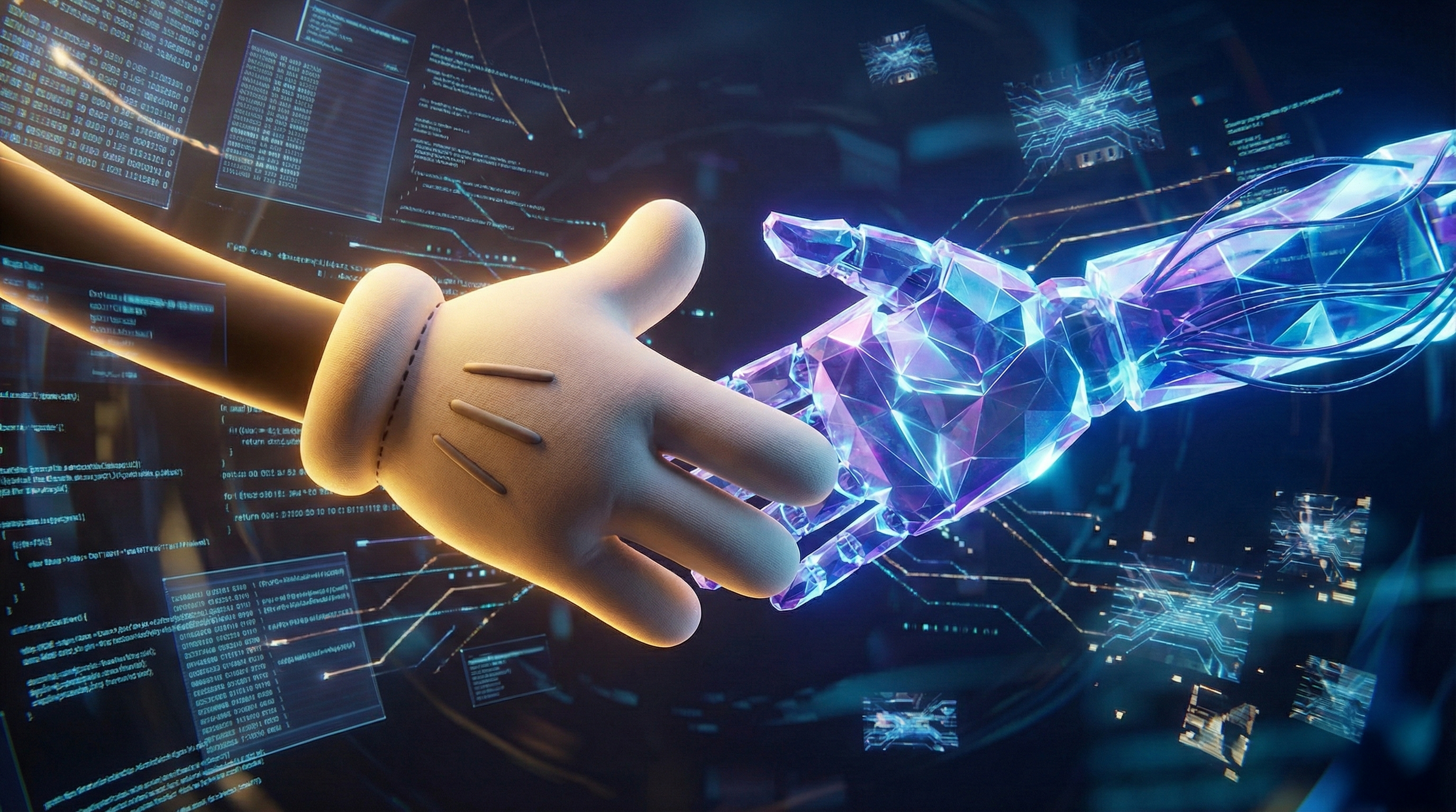
Disney’s new partnership with OpenAI is a watershed moment for storytelling. By investing in the company and licensing more than 200 Disney, Marvel, Pixar, and Star Wars characters into Sora, Disney is giving fans the ability to generate their own clips, and even curating select creations onto Disney+.
This move signals something profound: fans are no longer just the audience. They’re emerging as co-authors of the worlds they love.
But while the Disney X Sora partnership is a powerful proof of concept, it’s ultimately a one-to-one integration: one IP owner plugged into one AI environment (albeit a massive “one”). Furthermore, the AI landscape is getting more competitive and commoditized by the month. Even Microsoft’s CEO now says language models are “getting commoditized,” and OpenAI’s move into open models is widely seen as a concession that foundation models are becoming infrastructure, not moats.
At the same time, a 2025 foundation model report estimates that frontier models costing roughly $500M to train are effectively obsolete within three weeks of launch because of intense competition and open-source catch-up. Prices keep dropping, open models like Llama and Mistral are closing the performance gap, and most enterprises are already using multiple models in parallel for commodity cognition. In this environment, it’s becoming clear that hitching your cart to one horse means you are missing out on market share every time a better or cheaper model appears with users that you can’t reach.
This all validates the demand for participatory creativity, but it doesn’t scale the pattern. That’s the gap Spaceport was designed to fill. Built for scalable IP licensing, including centralized IP asset storage, brand guidelines, and license management, Spaceport enables IP owners to integrate one-time and reach every platform and channel, from model builders to game platforms to physical goods. It turns Disney’s bespoke deal into a repeatable, accessible infrastructure for the entire industry.
What’s most exciting about Disney’s move is the implicit recognition that ambassadors and fans are now essential to the growth of any IP. When fans can remix characters, reinterpret storylines, and share these creations with their networks, the reach of an IP expands organically and authentically. More than simply marketing impressions, these remixes become personal endorsements woven into real social graphs.
Finally, Disney’s deal acknowledges something every creator economy company already knows: the creative universe is always bigger when fans can help build it. No internal team, no matter how talented, can match the explosion of ideas that comes from millions of people imagining alongside them. The message is clear: The future of storytelling isn't proprietary; it's participatory. The IP that wins will be the one that isn't just owned, but one that is shared.
If you’re an IP owner and want to see how Spaceport can help your brand learn more at https://www.spaceport.xyz/brands.
Le Zhang is a serial tech entrepreneur and cofounder/CEO of Spaceport.xyz, a platform that empowers brands, agencies, and creators to scalably monetize their IP. He previously founded Squadle (acquired), an enterprise SaaS business which developed AI solutions for major international brands like McDonald’s, Hyatt Hotels, and 7-Eleven. Le has 4 patents in IoT, machine learning and computer vision. He graduated from Boston College with a degree in Computer Science.